Who will love it
Tower of London
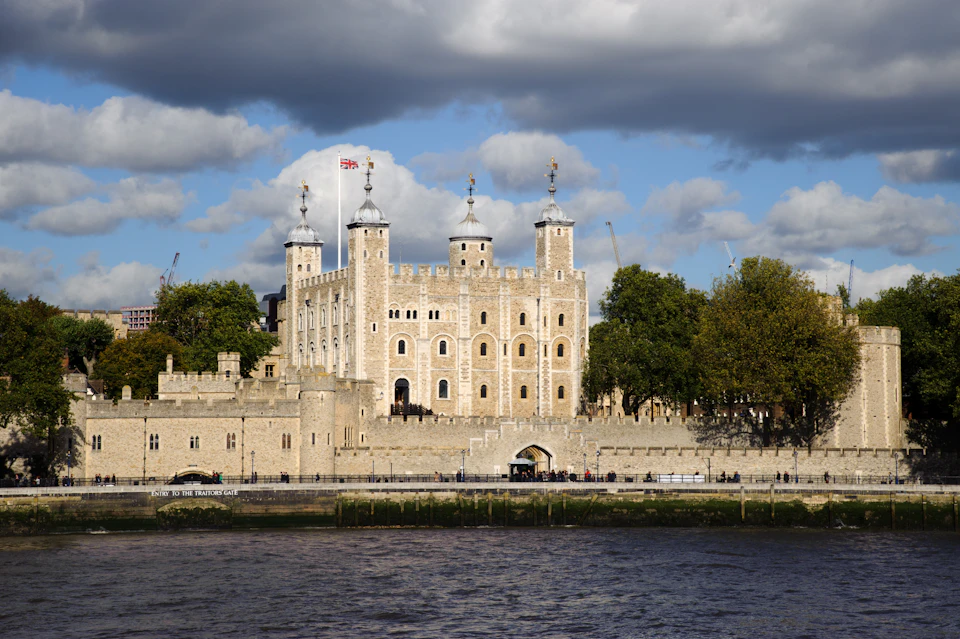

Tower of London
3 to 4 hours
The Tower of London is best approached as an expansive, open-air historical complex rather than a structured indoor museum.
Visitors who thrive on atmospheric storytelling and medieval architecture will find the site highly rewarding, whereas those expecting a climate-controlled, quiet gallery experience may find the constant outdoor transitions and heavy crowds overwhelming.
Navigating the grounds requires walking over uneven historic cobblestones and climbing steep, narrow spiral staircases inside the White Tower.
To avoid the longest queues, pass through the gates right at opening and head straight to the Crown Jewels before the crowds peak. While the Yeoman Warder tours near the entrance provide excellent historical context, do not hesitate to leave the group early if you see the line for the Jewel House is still short.
Practical Note: Wear flat, supportive footwear to navigate the medieval terrain comfortably, and dress in layers to handle the drafty stone towers.

Tower of London
London
United Kingdom
GBP
A standard admission ticket is the most practical choice for almost every visitor. It provides full access to the Crown Jewels, the White Tower, and the iconic Yeoman Warder tours.
Paying a premium for "Early Access" or "Opening Ceremony" tours is a genuine investment if you want to see the Crown Jewels without standing in a 60-minute queue, as these tours enter the gates before the general public.
The most common mistake is buying tickets at the entrance. Not only are gate prices higher, but you also risk waiting in a long queue just to reach the ticket window, only to find the next available entry slot is hours away.
The first entry slot of the day is the best time to visit. If you arrive 15 minutes before opening, you can walk directly to the Crown Jewels and see them without the pressure of a moving walkway crowd. Midweek visits are significantly calmer than weekends, which draw heavy local and school group traffic.
For a quieter experience, arrive around 2:30 PM. While you will have less time overall, the morning crowds usually begin to thin out, making the White Tower and the battlements much easier to navigate. Avoid visiting during UK school holidays if you prefer a peaceful atmosphere.
The Tower is included in the London Pass and the Go City London Explorer Pass, which are the most effective ways to save if you are visiting other nearby sites like Tower Bridge or St. Paul's Cathedral.
If you are traveling by train, the National Rail 2-for-1 deal offers significant savings, provided you book your voucher in advance and present a valid paper train ticket.
Children under five enter for free, and there are dedicated rates for students and seniors. Residents of the Tower Hamlets borough can also access the site for a fee of 1 GBP with proof of address and a Discovery Card.
There is rarely a need to pay for an external guide because the Yeoman Warder tours are included in your standard ticket. These tours depart every 30 minutes from the main entrance and are led by the Beefeaters themselves, who provide authentic historical narratives and live on the grounds.
A private tour only adds value if you are looking for an early-morning "Opening Ceremony" experience or a specialized architectural deep-dive. For the vast majority of visitors, the Beefeater tour combined with the official audio guide is the most comprehensive way to see the fortress.

Crowds peak midday around the Crown Jewels, making early morning the most strategic time to visit.
Mini-calculator based on crowd levels by day and time.
This day has average visitor density. This slot has a higher chance of a comfortable visit: Site closed.

Upon arriving at the pedestrian concourse, head to the West Gate, which serves as the primary entry point for all visitors. If you already possess a digital or printed ticket, proceed directly to the security lines. If you need to purchase or collect physical tickets, you must visit the ticket office located on the plaza before joining the entrance queue.
Time is most often lost at the mandatory bag security check, which can take 15 to 20 minutes during peak morning hours. Once inside the walls, the most significant bottleneck is the queue for the Crown Jewels at the Waterloo Block. To minimize waiting, prioritize this exhibit immediately after passing through the main gate.

The Tower of London is a sprawling fortress where the primary challenge is the terrain. The grounds are covered in original, uneven cobblestones that are difficult to navigate in heels or thin-soled shoes; sturdy footwear is essential.
Plan for at least three hours to see the main sites, and be prepared for significant standing time in the Jewel House queue, which is the most crowded part of the experience.
Security screening is mandatory for all visitors at the entrance. While the site is family-friendly, the narrow stone staircases in the White Tower and other fortifications are not accessible for strollers or those with significant mobility issues.
Most of the experience involves walking between buildings, so bring an umbrella or waterproof jacket as there is limited cover between the towers.
There are no lockers or cloakroom facilities available at the Tower of London. All belongings must be carried with you, so avoid bringing anything heavier than a small backpack. For large bags, use the third-party luggage storage services located at nearby transport hubs like Tower Hill or Fenchurch Street station.
Strollers are permitted on the grounds but are highly impractical on the cobblestones. You must leave strollers in the designated buggy park outside the White Tower before entering, as they are not permitted inside the historic buildings due to narrow passages and safety constraints. These parking areas are typically outdoors and uncovered.

Begin your morning exploring the Tower of London before the largest crowds arrive, then walk over to St Katharine Docks for a relaxed brunch at White Mulberries. Spend the afternoon crossing Tower Bridge to see HMS Belfast, and finish the day with sunset drinks at Coppa Club or a pre-booked visit to the Sky Garden.
This route pairs the city's oldest stones with its most modern skyline views in a single walking loop.

Built by William the Conqueror to dominate the city skyline, the White Tower was originally designed to intimidate Londoners and protect the new Norman administration. Over the centuries, the complex expanded into a formidable fortress that served as a royal residence, an armory, and even a royal zoo.
The site is most famous for its grim history as a high-security prison for those accused of treason. It held famous figures ranging from fallen queens to revolutionary plotters, with many meeting their end on the execution green. This dark reputation remains a central part of the atmosphere for visitors exploring the medieval towers today.
Today, the Tower is a living monument guarded by the Yeoman Warders, who maintain traditions that have lasted for centuries. It functions as a world-class museum housing the Crown Jewels, offering a direct link to the ceremonial history of the British Monarchy within its original defensive walls.

Partial (Significant historic cobblestones and stairs)
Yes (Free for under-5s; stroller parking provided)
The Tower of London is a medieval fortress with significant physical challenges. Large areas are paved with uneven cobblestones that are difficult for manual wheelchairs and strollers. A lift provides access to all floors of the White Tower, and the Jewel House is fully accessible via a dedicated entrance.
A limited number of manual wheelchairs are available for loan at the Welcome Center near the main entrance for no additional charge.
Families with children under 5 enter for free. Visitors under the age of 16 must be accompanied by an adult aged 18 or over. While strollers are permitted within the grounds, they cannot be taken into the Jewel House or the smaller towers due to narrow passages and steep spiral stairs.
Dedicated stroller parking is provided near the entrance to the White Tower.
Reduced-mobility visitors should note that the battlements and several smaller towers involve climbing steep, narrow stone steps. To avoid the longest queues, which frequently exceed 60 minutes for the Crown Jewels, arrive at the opening time. Accessible toilets are located near the Brick Tower and the Salt Tower.
Free public toilets are located at several points within the fortress walls, including the Welcome Centre near the main entrance, behind the Jewel House, and adjacent to the New Armouries Cafe. Accessible facilities and baby-changing stations are available at each of these locations.
The New Armouries Cafe is the primary on-site restaurant, offering a casual environment for hot British meals, soups, and sandwiches. For lighter refreshments, the Ravens Cafe near the Wakefield Tower serves coffee and snacks, while various outdoor kiosks provide ice cream and bottled drinks during peak hours.
Multiple themed gift shops are situated throughout the grounds. The main shop at the entrance stocks a broad range of souvenirs, while specialized boutiques near the Jewel House and inside the White Tower focus on royal-themed jewelry replicas, history books, and educational toys.
Free Wi-Fi is available for visitors in the New Armouries Cafe and the Welcome Centre. To stay hydrated, you can find chilled water refill stations located near the New Armouries building; bringing your own reusable water bottle is permitted and encouraged.