Hampton Court Palace

Hampton Court Palace

Why visit

Who will love it

Attraction: Hampton Court Palace Summary: A sprawling royal estate showcasing the dramatic contrast between Henry VIII’s Tudor architecture and the later Baroque additions by Sir Christopher Wren. Price from: £29.00 Duration: 3–4 hours Best time: Weekday mornings Booking required: Yes District: Richmond upon Thames

Who should skip it

Prioritize Hampton Court Palace if you want to immerse yourself in Tudor history and see where Henry VIII lived, or if you appreciate the architectural contrast of Christopher Wren’s Baroque design. It is ideal for families who will enjoy the famous hedge maze and travelers looking for a substantial, scenic day trip away from the crowded city center.

What to know beforehand

A vast royal estate blending Tudor history with Baroque grandeur, famous for its maze and the court of Henry VIII.

Hampton Court Palace functions as two distinct architectural experiences: the red-brick Tudor world of Henry VIII and the elegant Baroque palace of William III. Navigating the site requires significant stamina, as the distance between the Great Hall and the far reaches of the Great Fountain Garden is substantial.

History enthusiasts and those who enjoy grand landscape design will find the half-day commitment rewarding, but the scale may feel overwhelming for travelers seeking a quick photo opportunity. To get the most out of the visit, focus on the Tudor Kitchens for a sense of functional history rather than just the state apartments.

Insider Note: The Henry VIII apartments get crowded early; start in the gardens or the kitchens to find more space.

Arrive at 10:00 AM on a weekday to experience the Great Hall before the largest tour groups arrive.

Standard adult entry is £27.20. This includes access to the palace, all public gardens, and the maze.

Dedicate at least 4 hours to see the main highlights; the direct train journey from London Waterloo takes approximately 35 minutes.

🎫 Tickets, tours & discounts

Which Ticket to Choose

A standard admission ticket is the best choice for almost all visitors. It grants complete access to the Tudor kitchens, Henry VIII’s State Apartments, the Baroque rooms, the Cumberland Art Gallery, the famous hedge maze, and the 60 acres of formal gardens.

There are no official "fast-track" or "VIP" tickets, so the standard ticket is all you need to see the entire estate.

If you plan to visit other historic sites in London, a membership with Historic Royal Palaces is the only upgrade that makes financial sense. It pays for itself in just two visits and grants unlimited entry to this palace, the Tower of London, and Kensington Palace.

  • Standard Admission: Covers all palace rooms, the maze, the gardens, and the Magic Garden playground.
  • Historic Royal Palaces Membership: Best for travelers planning to visit multiple royal sites in a single trip.

Important: A common mistake is buying tickets at the gate. Booking online in advance secures your entry slot and is cheaper than buying on the day.

Best Time to Visit

To experience the palace without the crowds, book the first entry slot at 10:00 AM. Starting early is especially important if you want to navigate the hedge maze or let children play in the Magic Garden before school groups and day-trippers arrive.

If you prefer a quieter indoor experience, arriving around 2:00 PM is ideal as the morning crowds begin to thin. However, keep in mind that the palace closes at 5:30 PM, with the last admission at 4:30 PM, which leaves you with only a few hours to explore the massive grounds.

Combos and Discounts

You can save significantly by using multi-attraction passes. Both The London Pass and the Go City Explorer Pass include full entry to the palace, making them highly cost-effective if you plan to pair your visit with other major London sights.

If you are traveling by train, you can take advantage of the National Rail "2 for 1" promotion. By presenting a valid paper train ticket to Hampton Court station along with a printed voucher from the National Rail Days Out scheme, two adults can enter for the price of one.

Additionally, children under the age of five enter for free, and discounted tickets are available for youth aged 16 to 17, students, and seniors aged 65 and over.

When a Guided Tour is Worth It

For most visitors, a self-guided visit is perfectly sufficient. The standard admission ticket includes a highly detailed audio guide that leads you through the key historical routes, including the Tudor kitchens and the haunted gallery. Costumed historical presenters also roam the palace hallways, offering interactive storytelling at no extra cost.

A guided tour is only worth the extra cost if you are a dedicated history enthusiast seeking deep, academic insights into Tudor politics or the architectural transition to the Baroque style. Otherwise, the combination of the audio guide and the live palace actors provides an immersive experience on its own.

Weather now
London, United Kingdom
NowMostly clear 🌤️
Temperature25°C
VisibilityExcellent
AerosolsClean air · AOD 0.10

Good conditions for visiting today.

AOD — how much dust and haze in the air dim the distant view. 0 clean, >0.4 noticeable, >0.7 heavy.

Crowd indicator

Weekends and summer holidays draw the heaviest crowds due to the popularity of the gardens, while early weekday mornings offer the quietest experience.

When to go?

Mini-calculator based on crowd levels by day and time.

Best time at Mon — 18:00

This day is usually calmer than average. This slot has a higher chance of a comfortable visit: Closed.

30–50% · Quiet60–80% · Moderate90–100% · Crowded

Nearest days

TodayExpect peak summer crowds around midday, tapering off by mid-afternoon.
10:0035%
12:0085%
14:0065%
16:0025%
17:0010%
18:000%
TomorrowArrive right at opening to secure a quiet slot for the maze before the main influx.
10:0035%
12:0085%
14:0065%
16:0025%
17:0010%
18:000%
Day after tomorrowSlightly busier as the weekend approaches; booking online in advance is highly recommended.
10:0040%
12:0090%
14:0070%
16:0030%
17:0010%
18:000%

How to find the entrance

1
Hampton Court StationCross the bridge over the River Thames and follow the palace perimeter wall
2
Trophy GatesEnter the main palace grounds through the large iron gates flanked by stone lions
3
Ticket OfficeProceed to the left of the main courtyard to scan digital passes or purchase entry
4
West GatehouseWalk through the central Tudor archway to begin your tour in the Base Court

Hampton Court Way, East Molesey, KT8 9AU

Hampton Court Station (National Rail)

Richmond upon Thames

A historic royal palace featuring a blend of Tudor and Baroque architecture, famous for its Great Hall, sprawling gardens, and the iconic hedge maze.

Most visitors arrive via Hampton Court railway station. Upon exiting the station, walk directly across the bridge over the River Thames. The palace gates are clearly visible straight ahead once you cross the water. Follow the pavement toward the main Trophy Gates to enter the grounds.

After passing through the outer gates, do not go directly to the palace doors if you need to collect a ticket. The ticket office is located in a separate building to the left of the main courtyard. If you already have a digital ticket on your phone, you can proceed directly to the West Front entrance for scanning.

Expect a standard security bag check before you enter the palace buildings. While the queue for security moves efficiently, the walk from the station to the actual palace interior takes about ten minutes, so factor this into your arrival time.

  • Navigating the busy road junction between the station and the bridge.
  • Locating the ticket office before joining the main entry line.
  • Walking across the large open courtyards which offer little cover during rain.
ImportantHampton Court is in Travelcard Zone 6. Ensure your Oyster card or contactless payment method is ready for a longer journey fare than a standard central London trip.

Practical limits & what to bring

Hampton Court Palace

London

United Kingdom

GBP

What to consider before your visit

Expect a significant amount of walking across the 60-acre estate. The transition between the Tudor and Baroque sections involves crossing cobblestoned courtyards and navigating uneven floorboards, so sturdy footwear is essential.

While the palace is largely accessible via lifts, some narrow spiral staircases in the older wings are restricted for those with limited mobility.

Security checks are mandatory for all visitors at the main entrance. During peak periods, queues form at the ticket office and the entrance to the Henry VIII’s Kitchens. Most of the experience is indoors, but the extensive gardens are fully exposed, so bring an umbrella or sun protection as the weather dictates.

What you can and cannot bring

  • No large luggage or rucksacks (anything exceeding standard daypack dimensions).
  • No tripods, monopods, or selfie sticks.
  • No professional video recording equipment or drones.
  • No eating or drinking inside the historic state apartments and galleries.
  • No flash photography or filming in the Chapel Royal and Royal Pew.
  • Allowed: Small handbags and daypacks.
  • Allowed: Bottled water with a secure cap.
  • Allowed: Non-flash photography for personal use in most areas.

Storage and belongings

Self-service lockers are located near the Clock Court for small items and coats. These operate with a £1 coin, which is returned after use. These lockers are not large enough for suitcases or cabin bags; since there is no heavy luggage storage on-site, you must use external luggage services at major rail hubs like Waterloo Station.

Strollers and buggies are welcome in the gardens and most palace areas. However, for conservation reasons and to manage visitor flow in narrow corridors, you must leave them in the designated buggy park near the entrance when visiting specific historic rooms.

TipIf you are arriving directly from the airport, use a luggage storage provider near Hampton Court train station, as the palace security will deny entry to anyone with large suitcases.

Location and what's nearby

  • A leafy, affluent riverside district that feels like a historic village preserved on the edge of Greater London
  • Dominated by vast royal parklands and the Thames, making it a premier destination for outdoor leisure and walking
  • The atmosphere is quiet and refined, catering to families, history enthusiasts, and those seeking a slower pace
  • Centered around a charming high street filled with independent antique shops, boutiques, and traditional tea rooms
  • Bushy Park — expansive royal parkland with roaming deer herds and the ornate Diana Fountain · 2 min walk
  • Hampton Court Bridge — elegant river crossing providing the best panoramic views of the palace facade · 3 min walk
  • The Magic Garden — immersive family adventure playground built into the palace's former tilt yard · 5 min walk
  • Hampton Court Park — home to the Long Water canal and the world's oldest grape vine · 5 min walk
  • Tagg's Island — unique residential island famous for its eclectic collection of luxury houseboats · 12 min walk
  • Kingston upon Thames — historic market town featuring major high-street shopping and a lively riverside quay · 15 min by bus
  • Strawberry Hill House — Horace Walpole’s extraordinary Gothic Revival villa with ivory-white battlements and turrets · 20 min by bus
  • Richmond Park — the largest of London's royal parks known for its ancient oaks and viewpoints · 25 min by taxi
  • Kew Gardens — world-leading botanical gardens housing iconic Victorian glasshouses and a treetop walkway · 30 min by train
  • The Mute Swan — traditional English gastropub with oak beams located directly opposite the palace gates · mid-range · recommended to book · 2 min walk
  • Mezzet — high-quality Lebanese cuisine served in a sophisticated and intimate boutique setting · mid-range · recommended to book · 5 min walk
  • The Mitre (Coppernose) — stylish riverside terrace offering refined British plates and views of the Thames · high-end · booking recommended · 4 min walk
  • Henry's Kitchen — eco-friendly neighborhood bistro focusing on sustainable local ingredients and casual dining · budget · can visit without booking · 6 min walk

Begin your morning with a walk through the wilder sections of Bushy Park to see the deer before the palace crowds arrive. Spend the midday hours exploring the Tudor kitchens and the famous hedge maze within Hampton Court Palace, then head to Mezzet for a relaxed Lebanese lunch on the high street.

In the afternoon, take a scenic walk along the Thames path toward Tagg's Island or catch a bus to Kingston for riverside shopping, concluding your day with a sunset dinner at The Mitre.

NoteFor a more atmospheric arrival or departure, use the river boat service that connects the palace pier directly to Richmond and Westminster during the warmer months.
Reference

Facts

Read more
  • Total Area: 60 acres of formal gardens and 750 acres of parkland, making it one of the most expansive historic royal estates in the United Kingdom.
  • Room Count: Over 1,000 individual rooms, reflecting the palace's role as a massive administrative and residential hub for the Tudor and Stuart courts.
  • Tudor Kitchens: 36,000 square feet of workspace designed to feed 600 people twice daily, showcasing the immense logistical scale of royal hospitality.
  • Decorative Chimneys: 241 unique brick chimneys, representing the largest and most intricate collection of Tudor-style chimneys in England.
  • The Great Hall: 106 feet long and 60 feet high, featuring a hammerbeam roof that is considered one of the finest examples of medieval English carpentry.
  • The Maze: Half a mile of winding paths covering a third of an acre, established as the oldest surviving hedge maze in the country.
  • The Great Vine: Planted in 1768, it measures over 120 feet long and remains the largest grape vine in the world by surface area.
  • Myth: The entire palace was built during the Tudor era by King Henry VIII. Fact: Nearly half the structure was rebuilt in the Baroque style by Christopher Wren for William III.
  • Myth: The Haunted Gallery is a modern name created for tourism purposes. Fact: The name is centuries old, rooted in the 1541 account of Catherine Howard's desperate plea for mercy.
  • Myth: Henry VIII was the original architect and builder of the palace. Fact: Cardinal Thomas Wolsey began construction in 1514 before being forced to surrender it to the King.
  • Myth: The Great Vine is purely decorative and does not produce real fruit. Fact: It yields an annual harvest of Black Hamburg grapes that are traditionally sold to the public.
  • Myth: The palace was abandoned immediately after the death of the last Tudor monarch. Fact: It remained a primary royal residence until the reign of George II in the 1700s.
  • The Astronomical Clock: Located in Clock Court, it displays the time of high tide at London Bridge, which was essential for 16th-century river travel.
  • Royal Chocolate Kitchen: The only surviving 18th-century chocolate kitchen in Britain, once used to prepare luxury spiced drinks for King George II.
  • Real Tennis Court: The palace houses a functional court from 1625 where the original version of tennis is still played today by a private club.
  • Hidden Initials: Despite Henry VIII's orders to erase Anne Boleyn's memory, a few intertwined 'H' and 'A' monograms survived in the Great Hall's woodwork.
  • The Tiltyard: The site of Henry VIII's jousting tournaments is now home to the Rose Garden, though the original viewing tower still stands.
  • The King's Beasts: Ten stone statues on the bridge over the moat represent the heraldic lineage of Henry VIII and his third wife, Jane Seymour.
Background

History

Read more

Hampton Court Palace began in 1514 as a grand country retreat for Cardinal Thomas Wolsey, Henry VIII's chief minister. However, as Wolsey fell from royal favor, he gifted the lavish estate to the King in a bid to regain his standing.

Henry VIII immediately set about expanding it into a sprawling pleasure palace, building the Great Hall and massive kitchens to feed his court. The palace became the stage for the most dramatic moments of the Tudor dynasty, including the birth of Edward VI and the house arrest of Catherine Howard.

In 1689, the palace underwent a dramatic transformation. Monarchs William III and Mary II commissioned architect Sir Christopher Wren to demolish parts of the Tudor estate and build a new Baroque palace to rival Versailles.

Although the project was never fully completed, it left the property permanently split: one half Tudor red brick, the other elegant Baroque stone.

Two Palaces in One

For visitors today, this division offers a unique chance to walk through two distinct eras in a single afternoon. You can transition directly from the dark, atmospheric Tudor kitchens and the vaulted Great Hall into the airy, light-filled state apartments of the Stuart and Georgian monarchs.

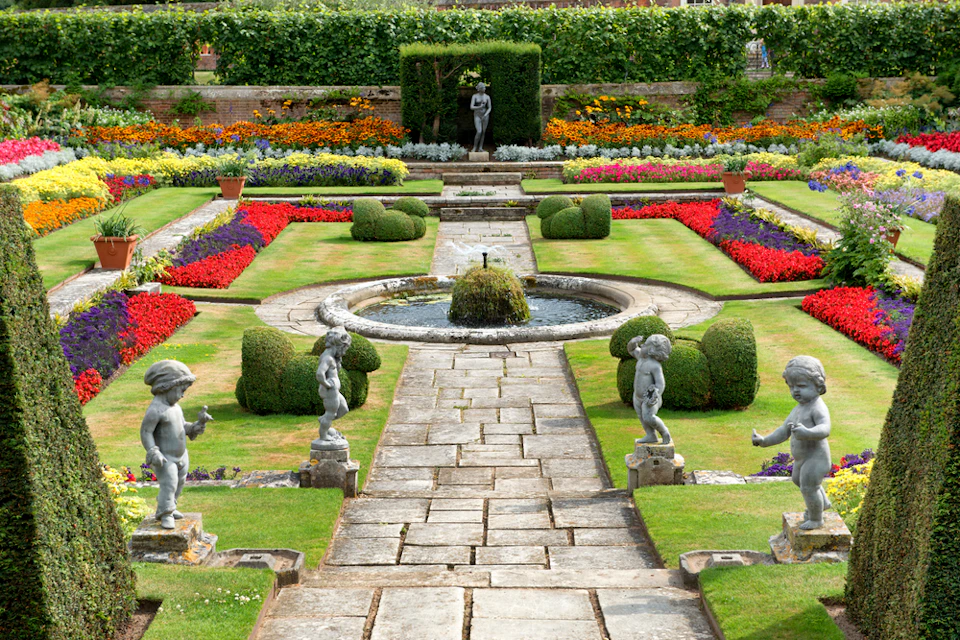
The surrounding gardens, featuring the famous puzzle maze planted in the 1690s, still preserve the grand designs of the royals who lived here.

♿ Accessibility & families

Accessible lift access to State Apartments; historic cobblestones in courtyards.

Excellent for all ages with dedicated play areas, though strollers must be parked before entering the palace buildings.

Mobility and Wheelchair Access

Hampton Court Palace is largely accessible for visitors with reduced mobility. While the historic courtyards feature original, uneven cobblestones, smooth stone paths are laid out to assist wheelchair users. Lifts are available to reach the first-floor State Apartments, including the William III and Georgian rooms.

Manual wheelchairs are available for loan at the Information Centre near the main entrance at no extra cost, provided on a first-come, first-served basis.

Families and Strollers

Children under the age of 5 enter the palace and gardens for free. Visitors aged 5 to 15 require a child ticket, and anyone under 16 must be accompanied by an adult at all times.

For those traveling with infants, strollers and buggies are permitted in the gardens and courtyards but are not allowed inside the State Apartments. A dedicated buggy park is located near the entrance to the palace buildings for secure storage while you explore the interior.

Practical Navigation

The site is vast, covering over 60 acres of gardens and several large palace wings, so be prepared for significant walking distances. Accessible toilets are conveniently located at the Base Court, the Fountain Court, and near the Tiltyard Café.

While the Tudor Kitchens and Great Hall are on the ground level, some secondary routes involve narrow corridors or steep spiral stairs that are not suitable for those with limited mobility.

🏢 On-site amenities

Facilities and Visitor Comfort

Restrooms are located throughout the site, including the Base Court, Fountain Court, and near the Tiltyard Cafe. All main toilet blocks are free for visitors and include accessible cubicles and baby-changing facilities. A dedicated nursing room is available near the Base Court for parents seeking privacy.

For dining, the Tiltyard Cafe offers a casual environment with hot meals, salads, and sandwiches near the Maze. Inside the palace, the Privy Kitchen serves coffee, cakes, and light snacks in a historic setting. During warmer months, additional kiosks often open in the gardens for ice cream and cold drinks.

The main gift shop at the entrance stocks a wide range of Tudor-themed souvenirs, historical books, and tapestry-inspired home decor. Smaller specialized shops are located within the palace and near the Wilderness, focusing on garden-related items and children's toys.

Free Wi-Fi is available in the main visitor areas and cafes. Drinking water fountains are provided near the Tiltyard and the entrance to encourage the use of refillable bottles, which are permitted across the grounds and gardens.

Reliability & freshness

UpdatedJune 19, 2026

I live in London and, after seven years here, I write clear guides on transport, costs, neighbourhoods and day trips.